
Three reasons no-hacking waterproofing fails
1. The leak was never a waterproofing problem.
In our experience this is the one that catches people out most often. A pressurised supply pipe, a loose waste connection or a leaking common stack produces the same ceiling stain as failed waterproofing. Sealing the floor over a leaking pipe does nothing — the water is coming from somewhere the treatment never reaches. The owner pays, the stain comes back in a month, and the method gets blamed.
The giveaway is timing. If water appears even when nobody has used the bathroom for a day, that points towards a pressurised pipe. If it slows or stops when the bathroom stays dry, it points towards seepage through the floor.
2. The tiles weren't sound.
No-hacking treatment works through the existing tiled surface. If tiles are hollow, lifting or debonded from the screed, the surface can't hold a seal. Tapping across the floor tells you quickly — a hollow drumming sound where it should be solid.
A contractor who skips this check and treats anyway is setting up a failure.
3. The scope was too small.
Water travels. A leak showing under the shower may be entering through a wall joint, a floor trap collar or a threshold two metres away. Treating only the obvious wet patch leaves the real entry point open.
What we actually check, before quoting anything
Every inspection starts the same way, and it is free.
Where and when. We ask where the stain appears, when it appears, and how long it's been happening. Whether it follows shower use, or rainfall, or neither. This alone narrows the cause considerably.
The downstairs side. Where possible we look at the affected ceiling or wall below. The pattern and position tell us a great deal about where water is entering above.
The tiled surface. We check the floor and lower walls for hollow tiles, failed grout lines, cracked joints and movement around the floor trap and threshold.
Other causes. We look at what else could produce the same symptom — pipework, the common stack in strata buildings, the roof, or structural movement.
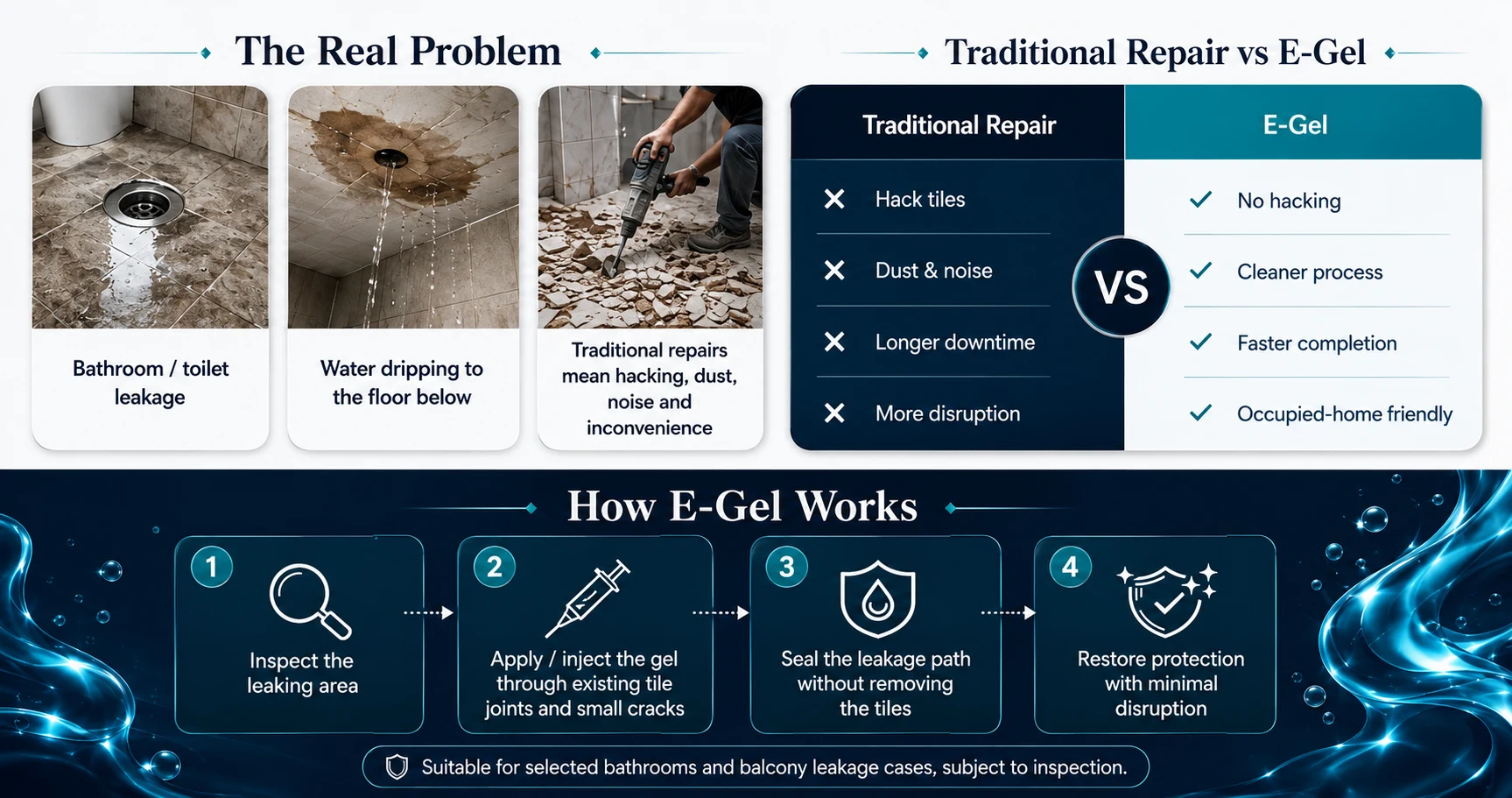
Then we tell you what we found. If it's waterproofing and your bathroom is eligible, we quote E-GEL with the scope, exclusions and 1-year written warranty terms in writing before anything starts. If it isn't, we tell you that instead. We'd rather lose the job than take money for a treatment that won't fix your problem.
Questions about bathroom leaks
Why did my previous waterproofing repair fail?
Three common reasons. The leak was never a waterproofing problem — a pipe, waste connection or common stack produces the same ceiling stain, and sealing the floor does nothing. The tiles weren't sound — treatment works through the tiled surface, and hollow or debonded tiles can't hold a seal. Or the scope was too small — water travels, and treating only the visible wet patch leaves the real entry point open.
How do I know if my leak is a pipe problem or a waterproofing problem?
The giveaway is timing. If water appears even when nobody has used the bathroom for a day, that points towards a pressurised pipe. If it slows or stops when the bathroom stays dry, it points towards seepage through the floor. An on-site inspection confirms which.
Can every bathroom leak be repaired without hacking?
No. A ruptured pressurised water pipe inside the wall or slab needs localised plumbing work. Structural cracking or slab movement needs structural repair. Tiles that are hollow, lifting or debonded cannot hold a seal. Leaks from a common stack shared with other units are a management matter as much as a repair. Any contractor who tells you every leak can be solved without hacking is telling you what you want to hear.
If you're in a condo or apartment
Inter-floor leaks in strata buildings carry an extra layer: the downstairs neighbour, the JMB or MC, and sometimes a formal leak notice under the Strata Management Act. A written inspection finding helps you show what the cause actually is, rather than arguing about it.
We provide written findings you can pass to your management office.
Service areas
Kuala Lumpur, Petaling Jaya, Selangor, Putrajaya and Cyberjaya. Including Cheras, Ampang, Damansara, Subang Jaya, Shah Alam, Puchong, Kajang, Bangi, Semenyih and Klang.