
The problem
Water from an upstairs bathroom was coming through into the staircase wall of a double-storey house in Bandar Mahkota Cheras.
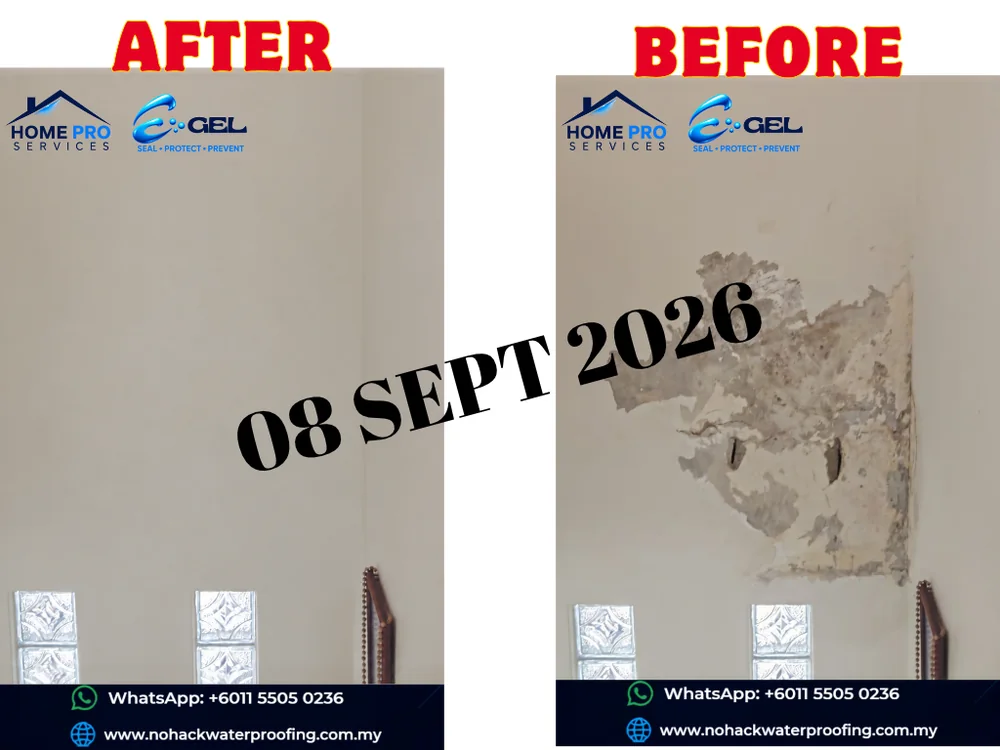
The photograph below shows what that does to a wall over time. The paint and plaster had blistered and fallen away across most of a square metre, leaving bare, stained render and two open cavities. This is the kind of damage people live with for months while they work out who to call, because every quotation starts with the same assumption — that the bathroom upstairs will have to be hacked open.
Working out where the water was coming from
A stained wall tells you there is water. It does not tell you where from. Before quoting anything, that question has to be answered, because the wrong answer wastes the customer's money.
The owner had already done the most useful test himself, without realising how valuable it was.
When the bathroom was not used, there was no leak. After someone showered, the wall was wet again.
That single observation rules out a great deal. A leaking pressurised supply pipe leaks continuously, it does not wait for someone to turn the tap on. A roof problem follows the rain, not the shower. A leak that appears only after the bathroom is used is a leak tied to water on the floor.
The owner also shut off the water supply and tested again.
To be certain rather than merely confident, we carried out a pipe pressure test on the bathroom's plumbing. That cost RM250, and it is money worth spending: if the test had found a pipe fault, sealing the floor would have achieved nothing and the leak would have returned.
The pipes held. No plumbing fault was found.
With the plumbing eliminated and the leak tracking the bathroom's use, the cause was a waterproofing failure, water passing through the bathroom floor.
What we did
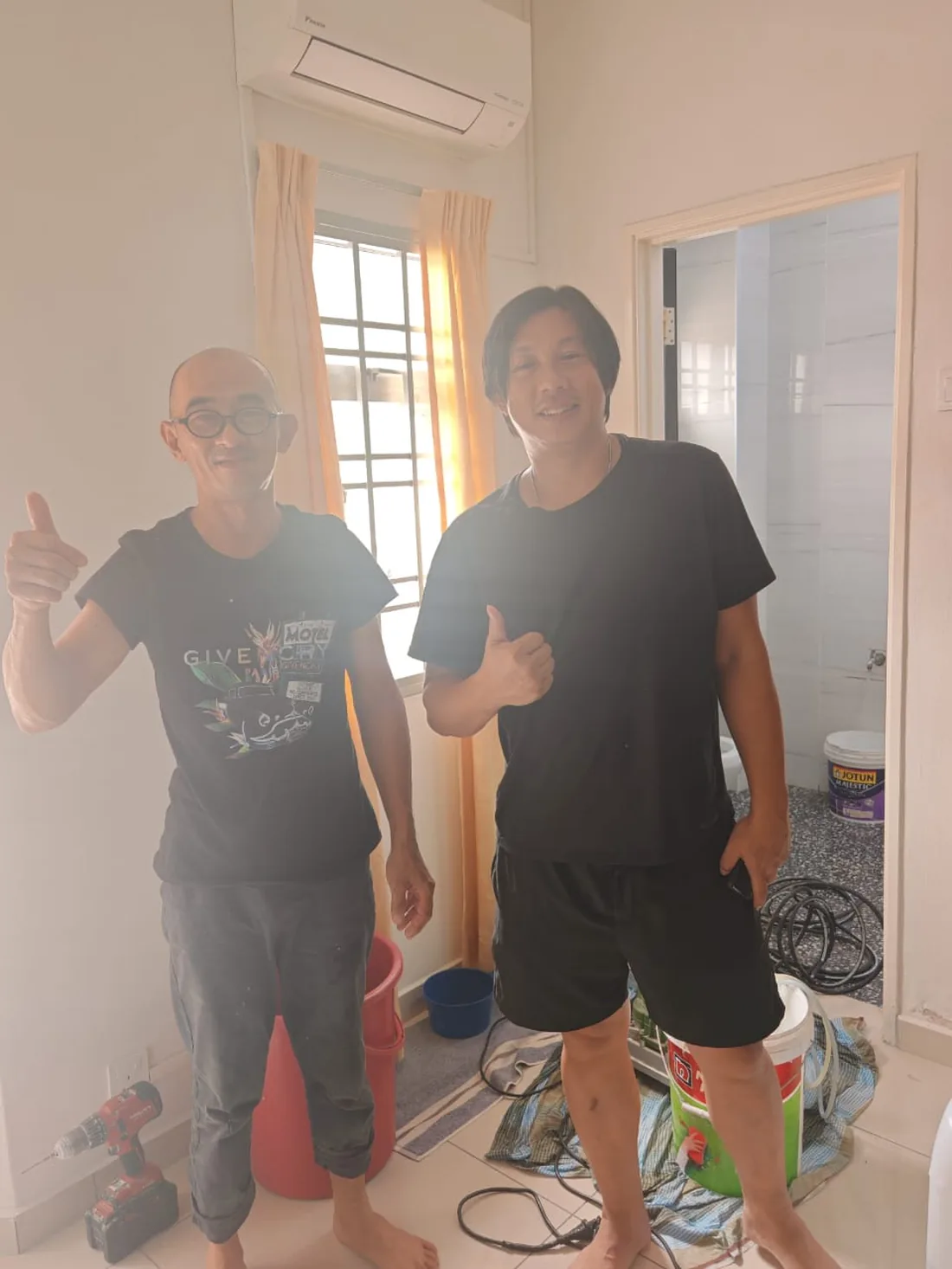
The bathroom floor was treated with E-GEL Micro Injection, applied through the existing tiled floor so the treatment travels beneath the tiles.
The tiles stayed where they were. No hacking, no demolition, no replacing the floor. The work took under two hours on site, and the bathroom was usable again the same day.
The result
We returned to inspect three days later. The wall was dry.
With the source stopped, the damaged section of the staircase wall was made good — patched and finished back to match. A dry wall with a hole in it is only half a repair, and the owner should not be left to arrange that separately.
E-GEL Micro Injection on site in Bandar Mahkota Cheras
The clip below shows the treatment being applied through the existing tiled bathroom floor. Nothing is hacked, removed or replaced.
What this job shows — and what it doesn't
This bathroom was suitable for E-GEL Micro Injection because the cause was water passing through the floor and the tiled surface was sound. That is not true of every leak.
A ruptured pressurised pipe inside a wall or slab needs plumbing work — which is exactly why we tested the pipes before quoting, rather than after. Structural cracking or slab movement needs structural repair. Tiles that are hollow, lifting or debonded cannot hold a seal. In a strata building, a leak from a common stack shared with other units is a management matter as much as a repair.
Nobody can tell you which of these you have from a photograph, and anyone who quotes you a price before inspecting is guessing with your money.
The RM600 figure above is what this bathroom cost in September 2026, with the pipe pressure test at RM250 on top. Your bathroom may be more or less depending on its size, its condition and what the inspection finds. We put the scope, the exclusions and the 1-year written warranty terms in writing before any work starts.
Questions people ask
Can a bathroom leak damage a staircase wall?
Water coming through a bathroom floor doesn't drop straight down. It runs along the slab until it finds a way out, and that can be a wall some distance away. On this job it came out in the staircase wall.
How do you know it's the waterproofing and not a pipe?
You test. The owner had already worked out half of it himself — no shower, no leak; shower, wet wall again. We ran a pressure test on the pipes anyway, RM250, before quoting anything. They held. So it was the floor.
Do you have to hack the bathroom?
Not if the water is coming through the floor and the tiles are still sound. We inject through the grout line. The tiles stay where they are.
How long does it take?
Under two hours on this one, and the bathroom was usable the same day. A bigger bathroom, or one in worse condition, takes longer.
Published with permission
This case study is published with the owner's permission. The property is identified by area only.